
What to Expect During an Eye Exam


Key takeaway about eye exams:
- Even if you don't wear glasses or contacts, routine eye exams are essential for protecting your long-term vision and eye health.
- Knowing what happens during an eye exam can help you feel more prepared for your appointment and reduce any anxiety.
- Eye exam frequency depends on your age, risk factors, and other vision needs.
- Symptoms such as blurry or double vision, eye pain, or flashes of light mean it's time to schedule an eye exam.
Maintaining eye and vision health is essential for your overall well-being, and an important part of taking care of your vision is eye exams. Regular eye exams are necessary for detecting vision problems early and monitoring for any eye diseases.
Understanding what happens during an eye exam can help calm your nerves so you can be confident about taking proactive steps to protect your vision.
How do I know if I need an eye exam?
Determining whether you need an eye exam is simple: everyone should have one regularly!
Regular check-ups are crucial for maintaining the long-term health of your eyes and vision, regardless of whether you wear glasses or contacts.
However, some situations require immediate attention, and you should always schedule an appointment with your eye doctor if you experience any of the following:
- Family history of eye diseases
- Sudden loss of or worsening vision
- Eye pain or injury
- Double vision
- Flashes in your vision
How often should you have an eye exam?
When and how often you should have an eye exam generally depends on your age and vision health.
- Children and teens: Infants should have their first eye exam at about six months if there are no noticeable, existing problems. They should have another at age three, and again before entering first grade. After that, they should have an eye exam every year.
- Adults: Adults should have an eye exam at least every two years. It's recommended that those with higher risk factors, such as a family history of eye diseases, diabetes, or wearing vision correctors, schedule annual exams.
- Seniors: For individuals over the age of 60, annual eye exams are recommended to monitor for age-related conditions like cataracts and glaucoma.
What to expect during an eye exam
Eye exams typically include a variety of tests to assess the health and functionality of your eyes. There are two types of exams:
Routine eye exam
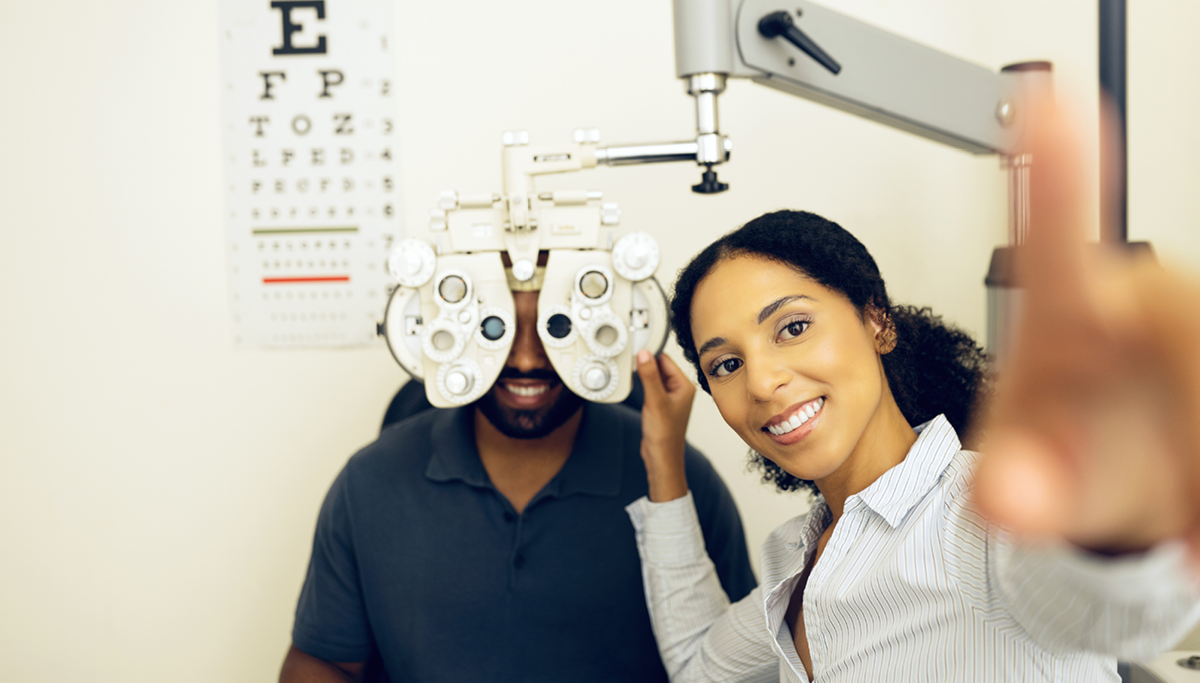
During a routine eye exam, your eye doctor will check for common vision problems like nearsightedness, farsightedness, and astigmatism by conducting a visual acuity test using an eye chart to measure how clearly you can see at various distances. You will then sit in front of a phoropter device and answer a series of clarity questions to determine any possible prescription for glasses and/or contact lenses.
Comprehensive eye exam
A comprehensive eye exam includes everything in a routine exam, plus a thorough evaluation of the overall health of your eyes. Your doctor will start by asking you about your medical history or any symptoms, before conducting a series of tests:
- Eye muscle movement test: Using either a finger or an object, your doctor will have you follow a target with your eyes to check the extraocular muscles.
- Cover test: Using an opaque or translucent occluder to cover one eye, this test helps determine your ocular alignment and how well your eyes work together.
- External exam and pupil reactions: During this eye exam, your doctor will manually examine your pupils' response to light and objects and check the whites of your eyes and eyelid position.
- Slit lamp examination: Using a special magnifying and illuminating microscope called a slit lamp, your doctor will examine the different parts of your eyes to check for conditions.
- Retinal examination (Ophthalmoscopy): Your doctor will use an ophthalmoscope to examine the optic nerve head, retinal vessels, and macula. This may require your eyes to be dilated.
- Glaucoma testing: Doctors can identify glaucoma using a tonometer or a puff of air to measure your eye pressure.
- Pachymetry: For this test, you'll place your head and chin against a machine that captures images to help your doctor measure the thickness of your cornea.
After these tests, your doctor will discuss the results and answer any questions. Based on their findings, they may prescribe glasses or contacts, suggest lifestyle changes, or recommend further tests or treatments.
Your eyes are an invaluable asset to your life and taking care of them should be a priority. Schedule your annual eye exam with your eye doctor today.
Are you ready to learn more about vision health? Check out, “How to Protect Your Eyes at the Pool”.