
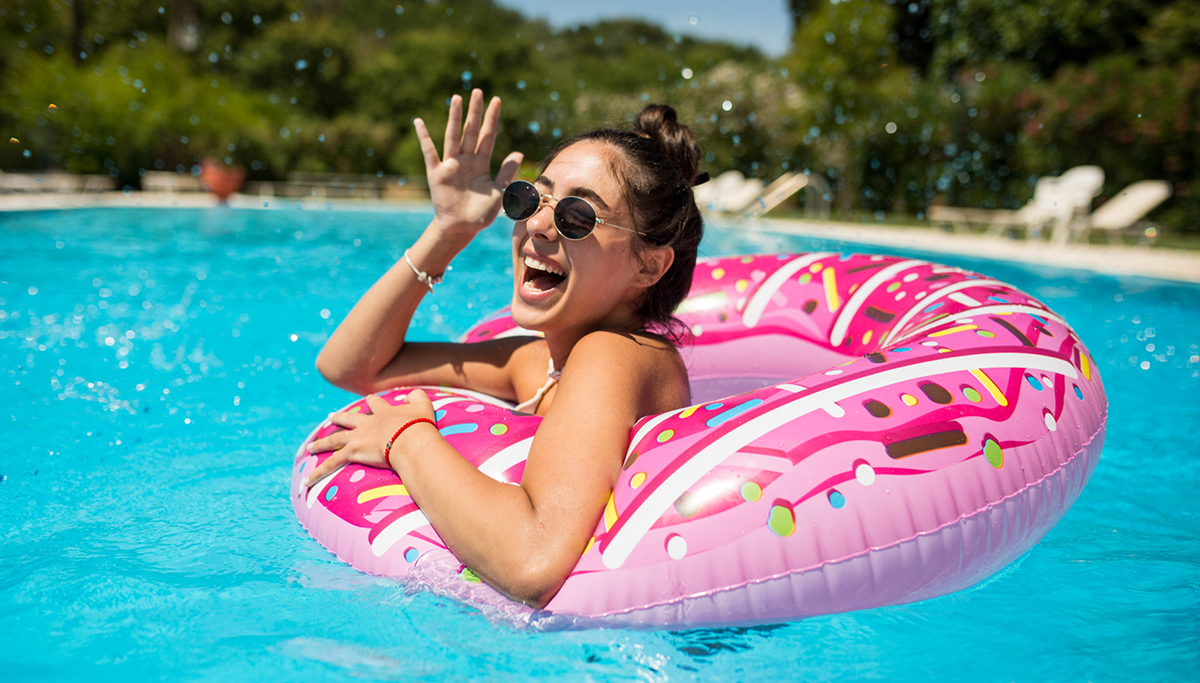
How to Protect Your Eyes at the Pool


Key takeaways about protecting your eyes in the pool:
- Protecting your eyes is important, especially when you’re enjoying time at the pool. Don’t let eye problems ruin your summer fun!
- Although chlorine does a great job of keeping water clean, it also doesn’t eliminate everything that can harm your eyes.
- Wearing sunglasses both in and out of the pool is a great way to protect your eyes from harmful ultraviolet rays.
Summertime typically means plenty of pool days. While splashing, doing cannonballs, or getting a workout in the lap lane is a great way to get energy out, it’s easy to forget to protect your eyes while you’re in the water.
Check out these simple tips to help keep your family’s eyes healthy, comfortable, and safe all summer long.
The dangers of pool water to the eyes
If you take a quick glance at people around a busy pool, you will likely notice red, irritated eyes.
Why does this happen?
Most of the time, the culprit is chemicals in the water.
One of the most common pool chemicals is chlorine, which is used to disinfect the water and help protect swimmers from harmful bacteria and viruses. While chlorine plays an important role in keeping public pools safe, it can also irritate your eyes. According to the Cleveland Clinic, exposure to chlorinated water may cause red, watery, or sensitive eyes after spending time in a pool or water park.
Although chlorine does a great job of keeping water clean, it also doesn’t eliminate everything. Bacteria and viruses that aren't killed by chlorine, like those that cause pink eye, can still be lurking.
Furthermore, people who wear contact lenses in the water or have small cuts on their eyeballs are potentially more susceptible to infections from these bacteria and viruses.
How to protect your eyes at the pool
The good news is there are many ways you can protect your eyes at the pool:
Wear goggles while swimming
If you’re in the water often, it’s a smart idea to invest in good goggles to wear in the pool. Swim goggles work by reducing exposure to chemicals in the pool and help protect your eyes from surprise splashes. Both adults and kids should consider wearing goggles anytime they’re in the water.
For the best protection and comfort, look for goggles that fit securely without feeling too tight. Adjustable straps and a comfortable seal around the eyes and nose can help prevent leaks while making swimming more enjoyable.
Avoid faces during a splash fight
If splash fights are a common occurrence at the pool, make sure participants avoid splashing the eyes and faces of their opponents. It’s not always as fun, but serious splashing can cause eye injuries. This is because splashes are essentially streams of water that can hit the eyes at high speeds.
With enough speed, the impact of these streams can lead to eye irritation in minor cases or more serious injuries such as lens dislocation or hyphema, which is the pooling of blood in the eye.
Wearing goggles during splash fights can easily help protect your eyes.
Rinse eyes out afterward
Another way to protect your eyes after a day at the pool is to rinse them out with fresh, clean water or even a saline solution. This will help flush the chemicals and other irritants out of the eyes, and it can reduce eye irritation. It’s important to do this quickly after getting out of the water to stop chemicals from staying on your eyeballs too long.
According to the Cleveland Clinic, the following steps should be taken to flush eyes out correctly:
- Start with clean hands. Make sure to wash your hands with soap and water and dry them before starting.
- Take out contact lenses, if you wear them, prior to rinsing.
- Flush your eyes with a gentle stream of clean water or saline solution. Do your best to keep your eyes open as much as possible.
- Continue to rinse your eyes for up to 15 minutes, as needed.
Another option is rinsing your eyes off in the shower after swimming. Instead of looking directly into the water stream, let the water run gently over your forehead and down across your eyes to help wash away chlorine and other irritants.
Always wear sunglasses to protect your eyes
Wearing sunglasses both in and out of the pool is a great way to protect your eyes from harmful ultraviolet rays. Sunlight reflected off the water can lead to photokeratitis, or a sunburn on the corneas of the eyes.
Wearing sunglasses that have 100 percent UV ray absorption will help protect your eyes. If you don’t want to wear sunglasses in the pool, consider swim goggles with UV protection.
For more ways to protect your eyes from UV exposure, check out this blog.
Keep your eyes healthy all summer long
Taking steps to protect your eyes is important, especially when spending time at the pool this summer. A little prevention can help keep irritation, injuries, and infections from getting in the way of your fun.
If you do end up with an eye injury or infection, it’s important to see an eye doctor as soon as possible. Vision insurance like DeltaVision® makes it easy to find an eye doctor near you.
To learn more about vision insurance, check out, “5 Ways to Improve Your Eye Health”.