
What Are Tonsil Stones?


*Updated August 2026
Key takeaways about tonsil stones:
- Tonsil stones are calcified clumps that develop when food particles, bacteria, calcium, dead cells, mucus, and other debris become trapped in the pockets of your tonsils and harden over time.
- Although uncomfortable, they are rarely a cause for concern and can be easily managed at home.
- Persistent or painful tonsil stones are worth a conversation with your dentist, who can recommend the best course of action.
Have you ever felt a little something in the back of your throat, a white spot, or maybe a sore throat that is relieved with some gargling? You may be dealing with tonsil stones!
Tonsil stones are a common condition that impacts around 40 percent of people. Although they are generally harmless, they can be annoying and lead to bad breath, coughing, and more.
The good news is that tonsil stones are almost always easily managed at home.
What exactly are tonsil stones?
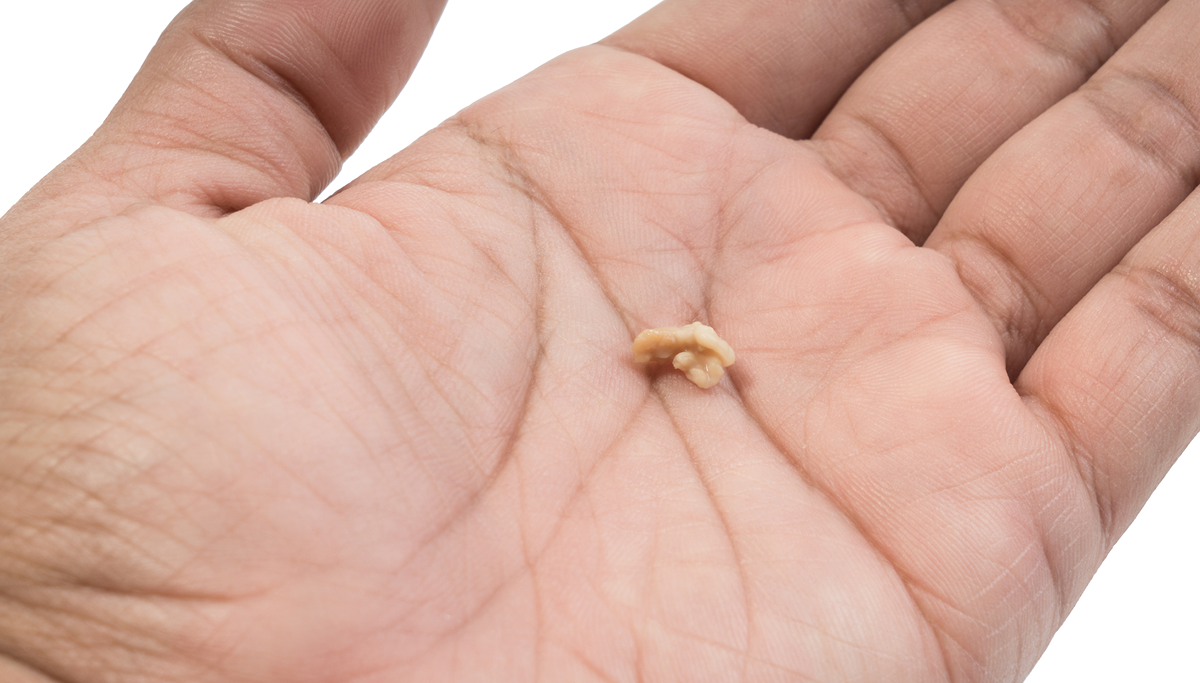
Tonsil stones, also known as tonsilloliths, are calcified clumps that form when "food, bacteria, minerals such as calcium, and other debris, like dead cells and mucus" get trapped in the sponge-like pockets of your tonsils. These tonsil stones typically manifest as small white or yellow pebbles embedded in your tonsils.
Tonsil stones can vary in size but are often only a few millimeters, although one of the largest tonsil stones measured was 4.2 × 3.6 × 2.1 centimeters.
Common symptoms of tonsil stones
Perhaps the only convenient thing about tonsil stones is that most of the time, you'll know you have them. This makes it easier to detect and treat early.
Often, people with tonsil stones feel a persistent sensation of something lodged in the back of the throat.
According to the Cleveland Clinic, other symptoms may include bad breath, difficulty swallowing, a sore throat, coughing fits, and earaches.
What to do if you have tonsil stones
It’s important to let your dentist know if you’re experiencing any symptoms of tonsil stones so they can advise you on the best way to treat them and monitor for recurrence.
Getting rid of tonsil stones doesn't typically require extensive treatment and can often be taken care of at home if symptoms are minimal. Gargling with warm salt water is recommended to try and loosen the stone initially and to help clear out any bacteria afterward.
If gargling doesn't work, gently nudging the stones out with a wet cotton swab may help.
If that doesn't work, professional assistance may be necessary for the treatment and removal of tonsil stones.
Visit your dentist if:
- You’re experiencing extreme discomfort
- They fail to fall out naturally
- At-home remedies prove ineffective
- Tonsil stones continue to form
The bottom line on tonsil stones
Tonsil stones may be uncomfortable and inconvenient, but they’re rarely a cause for serious concern. Maintaining your oral hygiene by brushing regularly and staying hydrated can go a long way in preventing them from forming in the first place.
When in doubt, your dentist is your best resource for keeping your tonsils in great shape.